Location: G.07 Meadows Lecture Theatre
Location: G.07 Meadows Lecture Theatre
G.07 Meadows Lecture Theatre,
Doorway 4, Old Medical School,
Teviot Place
EH8 9AG
Part of: Queer Transgression and
Resistance
Ariana Steele, Pennsylvania State University, State College, United States
Elanur Sönmez, Pennsylvania State University, State College, United States
Abstract:
Recent research on queer speech has shown that queer speakers modulate their voices and other stylistic resources to signal or conceal aspects of identity depending on audience, setting, and goals, often contextualizing these shifts as due to safe vs. unsafe or queer vs. non-queer environments (e.g., Russell, 2017; Khoo & Ilbury, 2023; Podesva and Van Hofwegen, 2016; Gratton, 2016). While these shifts in language use reflect queer speakers’ shifting senses of safety and comfort, they also construct safety and comfort as dichotomous for queer people – where a context is either “safe” or “unsafe,” or “queer” or “not queer” – and overlook moment-to-moment interactional contexts and affectual stances. Other recent work on nonbinary language practices suggests that nonbinary individuals use semiotic resources in creative ways that go beyond simple with-or-against responses to cisnormative social structures (e.g., Calder, 2019; Steele, 2022; Jones, 2022). Extending sociolinguistic variationist analyses of specific linguistic variables at stake, nonbinary discourses about the varied contexts in which they shift their speaking styles can help shed light onto the complex motivations that queer speakers rely on to adjust their language practices.
In this study, we therefore ask: what if the line between (dis)belonging were more fuzzy than clear, more queer than straight? The present study analyzes how a multiracial group of twenty nonbinary individuals in the American Midwest affectively discuss their shifting speech and embodied presentations across various contexts, including family, professional, and social settings. Interviews were analyzed through discourse analysis informed by a grounded theory approach, involving iterative coding of emergent themes (Glaser & Strauss, 1967). The findings show that nonbinary individuals strategically monitor their voice modulation and embodied presentation in ways that move beyond a binarious safety–risk paradigm, encompassing communicative aims such as asserting their nonbinary identity, fostering comfort, or subverting dominant understandings of gender and embodiment. For instance, participants discuss combining shifts in pitch and tone with embodied presentation to subvert normative expectations of gendered embodiment and navigate the emotional terrains of their social interactions. More specifically, one speaker reports adopting a “deeper voice” with conventionally feminine clothing to “fuck with their [their interlocutors’] idea…” of “what sort of voices can be attached to a look”. Another participant reports that, rather than consistently opting for safety in confrontational settings, they purposefully adopt a lowered pitch to “aggressively present” to their family members who fail to recognize their nonbinary identity despite prior disclosure.
By centering discourse, embodiment, and affect, this study advances sociolinguistic understandings of style shifting as a relational and context-sensitive practice, where speaking style carries social meaning through indexicality (Eckert, 2012; Niinisalo, 2024). It moves beyond macro-level contrasts between cisnormative and queer speech to foreground the micro-level interactional contexts in which speakers negotiate interlocutors’ expectations alongside and part-and-parcel to their own comfort, safety, and nonconformist urges. In doing so, it shows that nonbinary individuals’ stylistic practices are not simply oppositional to normativity or motivated by a zero-sum game of safety and risk, but dynamically responsive to the demands and affordances of each interaction.
References
Calder, J. (2019). From sissy to sickening: the indexical landscape of /s/ in SoMa, San Francisco. Journal of Linguistic Anthropology, 29(3): 332-358.
Eckert, P. (2012). Three waves of variation study: The emergence of meaning in the study of sociolinguistic variation. Annual Review of Anthropology, 41(1), 87-100.
Glaser, B., & Strauss, A. (2017). Discovery of grounded theory: Strategies for qualitative research. Routledge.
Gratton, C. (2016). Resisting the gender binary: The use of (ING) in the construction of non- binary transgender identities. University of Pennsylvania Working Papers in Linguistics, 22(2).
Jones, Jacq. (2022). “Authentic Self, Incongruent Acoustics: A Corpus-Based Sociophonetic Analysis of Nonbinary Speech.” [Doctoral Thesis, University of Canterbury]
Khoo, J, and C Ilbury. (2023). Navigating ‘Safe’ and ‘Non-Safe’ Queer Spaces: A Study of Style-Shifting in Singapore. Journal of Language and Sexuality.
Niinisalo, T. (2024). Finnish queer teachers’ understanding of their language use in the workplace. Gender and Education, 36(6), 682-697.
Podesva, R. J., Roberts, S. J., & Campbell-Kibler, K. (2002). Sharing resources and indexing meanings in the production of gay styles. Language and Sexuality: Contesting Meaning in Theory and Practice, 175-189.
Podesva, R. & Van Hofwegen, J. (2016). /s/exuality in Smalltown California. In E. Levon & R. Beline Mendes (Eds.), Language, Sexuality, and Power. Oxford University Press
Russell, E. L. (2017). Style shifting and the phonetic performance of gay vs. straight: A case study from French. Journal of Language and Sexuality, 6(1), 128-176.
Steele, A. J. (2022). Enacting New Worlds of Gender: Nonbinary Speakers, Racialized Gender, and Anti-Colonialism. In Oxford Handbook of Language and Sexuality (pp. 1–26). https://doi.org/10.1093/oxfordhb/9780190212926.013.74
Part of: Queer Transgression and
Resistance
Erin Moriarty, University of Virginia, Charlottesville, United States
Octavian Robinson, The Ohio State University, Columbus, United States
Abstract:
This paper examines the politics of contact between hegemonic languages, such as English, and relatively minoritized languages, such as American Sign Language (ASL), with a specific focus on how gender and sexuality are indexed. ASL’s multimodality affords infinite possibilities for queering binary understandings of gender, particularly through phenomena like mouthing and pointing. Mouthing, or the silent articulation of spoken/written words alongside the simultaneous production of a sign (Jaraisy & Stamp, 2024), has historically been marginalized in linguistic research. Similarly, pointing, an indexical feature of ASL, offers unique affordances for encoding meaning through non-arbitrary gestures, extending the possibilities available in spoken languages (McBurney, 2002). These elements, when analyzed through a gender-critical, queer, and trans lens, challenge conventional categorizations of linguistic normativity.
Historically, perspectives on Deaf language, such as those advanced by Helmer R. Myklebust (1960, republished in 2022), have framed certain ASL structures as “language errors.” Myklebust used the term “deafisms” to describe patterns of usage that deviate from spoken language norms. This pathologization reflects linguistic ableism, which constructs ASL as deficient rather than recognizing its expansive possibilities for world-making. Through a Crip Linguistics lens, we interrogate the assumptions underpinning such pathologization, highlighting how so-called “errors” are instead productive sites of linguistic innovation and self-determination.
A central concern of this paper is what happens when heteronormative expectations are applied to Deaf languaging practices. We specifically focus on the mouthing of pronouns in ASL. Pronoun use in ASL offers a compelling site for analyzing how gender is indexed and how modalities can reinforce or disrupt expectations of gender normativity. Given that ASL’s visual-gestural modality allows for fluid and expansive gender expressions, its pronoun system provides unique insight into how trans and nonbinary identities are signified, misread, or erased within hegemonic linguistic frameworks.
Part of: Seeking non-binary gender justice in Romance language education: Authority, legitimacy, and (dis)belonging
Diana Carter, The University of British Columbia, Kelowna, Canada
Angela George, The University of Calgary, Calgary, Canada
Francis Langevin, The University of British Columbia, Kelowna, Canada
Abstract:
In additional language classrooms, efforts to integrate gender-inclusive language often encounter resistance, uncertainty, and practical challenges among educators. Such pushback is often rooted in prescriptive ideas about how language should work, in deference to linguistic authorities, and in binary assumptions about gender, all of which intersect with broader sociopolitical backlash that shapes what counts as legitimate classroom language (Knisely, 2025). In response to these tensions, recent classroom‑focused scholarship has introduced a range of concrete implementation strategies, including ergonomic and design‑thinking models for inclusive pedagogy (Brisson, 2024), language‑specific guidelines and resources for inclusive Italian (Merolla, 2024), lesson plans that embed nonbinary language and trans‑affirming practices in Portuguese (Osborne, 2024), multilingual institutional guidelines that address classroom practice and assessment (Carlini Versini et al., 2025), and equity‑ and social‑justice‑driven frameworks and activity blueprints in Spanish (Parra & Faria, 2024; Zandomenico & Fernandes, 2024). However, large-scale teacher‑centered evidence on how educators navigate these resources amid everyday instructional and institutional constraints remains limited.
Over the past two years, we have delivered professional development workshops on gender-inclusive language to approximately 500 educators worldwide who teach Romance languages across proficiency levels and age groups. During the workshops, educators completed surveys about their familiarity and use of gender-inclusive language, submitted comments via the Zoom chat, and discussed the difficulties they encountered and solutions they implemented. Using qualitative thematic analysis (Saldaña, 2025), our preliminary findings show that participants’ concerns closely align with Veergoossen et al.’s (2020, p. 336) categories of resistance to language change (“(a) defending the linguistic status quo, (b) diminishing the issue and its proponents, (c) sexism and cisgenderism, and (d) gender-fair language being distracting in communication”). Our data also reveal additional practitioner-focused pedagogical constraints. Although many of our workshop participants expressed interest in adopting gender-inclusive language and demonstrated varying levels of familiarity with it, they also described several practical challenges they face (e.g., how to teach this to dyslexic students or young students), while others voiced strong objections (e.g., “why spend public resources on something that affects 1% of the population?”; “this is going to hurt the integrity of the language”). For example, one frequently cited but largely anecdotal concern is that gender-inclusive language might impede language learning (Knisely, 2025). Empirical evidence challenges this assumption: Knisely (2022) found that intermediate French learners made fewer grammatical errors and improved their accuracy with complex structures when gender-just pedagogies and the use of gender-inclusive language were integrated into the course. Drawing from participants’ comments and questions, we outline evidence-based linguistic, pragmatic, and pedagogical pathways to address these challenges, and we identify research gaps that respond to educators’ concerns and help counter common criticisms.
Part of: Seeking non-binary gender justice in Romance language education: Authority, legitimacy, and (dis)belonging
Julia Spiegelman, The University of British Columbia, Vancouver, Canada
Abstract:
In the U.S., one in four LGBTQ+ young people identifies outside of the gender binary (The Trevor Project, 2021). The majority of students learning a language in US schools study so-called “gendered” languages such as French and Spanish (ACTFL, 2017), which apply a label of either “masculine” or “feminine” to inanimate and animate nouns and to many corresponding modifiers. While grammatical gender is distinct from social gender, the two are often conflated (Knisely, 2020; Tudisco, 2024). As French and Spanish evolve in queer communities to include nonbinary pronouns and morphemes (Ashley, 2019; George et al., 2025), linguistic authorities such as language academies remain resistant to linguistic forms and practices aiming for gender inclusion (e.g., Diaz et al., 2022; Kosnick, 2019). Nonbinary students learning “gendered” languages like Spanish or French may feel frustrated by a lack of official gender-neutral options, experience misgendering as traumatic, and/or use grammatical gender as a strategic tool (Baros, 2021; Spiegelman, 2022), yet these voices are barely represented in research. As power dynamics grounded in cisheteronormativity, teacher authority, and ideologies of linguistic “correctness” and “legitimacy” play out in classrooms (Moore et al., 2024; Spiegelman, 2024a, 2024b), these students also have agency to interpret and act upon the language in creative ways (Author, forthcoming). More research is needed to understand how nonbinary learners of “gendered” languages understand and navigate grammatical gender.
To investigate this question, this paper draws from a larger collaborative study grounded in trans epistemologies (Jourian & Nicolazzo, 2017), which engaged 12 nonbinary learners of French and Spanish in U.S. high schools in a Zoom community focused on gender and language learning. The project, facilitated by a cisgender researcher and nonbinary research assistant, took place over a six-month period and engaged students individually and collectively through surveys, interviews, focus groups, journals, and artifacts including artwork. Reflexive thematic analysis (Braun & Clarke, 2022) showed that many nonbinary students experienced grammatical gender as an obstacle to self-expression, an effect which was heightened by a perceived lack of power and legitimacy as learners. At the same time, many learners adopted stances as linguistic revolutionaries, taking an active role in the evolution and re-creation of the languages they learn. By analyzing students’ linguistic strategies, metalinguistic statements, and examples of their creative work, the findings highlight students’ agency, innovation, and claimed authority even when they are positioned as disempowered. In closing, we will discuss the structuring role and liberating potential of language ideologies as purveyed by teachers.
Part of: Seeking non-binary gender justice in Romance language education: Authority, legitimacy, and (dis)belonging
Daniel Amarelo, Universitat Oberta de Catalunya, Barcelona, Spain
Abstract:
The paper explores the collaborative creation of a forthcoming guide to nonbinary Galician, scheduled for publication in March 2026 by Através Editora, through the dual lenses of language policy and sociolinguistic justice. This guide was co-created by speakers, linguists and activists, reflecting a deliberate effort to combine academic expertise, community knowledge and activist praxis. Its orientation is explicitly sociolinguistic and educational, designed to provide practical tools for inclusive language use in classrooms, community programs and other pedagogical settings. The project is situated within the particular context of Galician as a minoritized language in Europe, which faces multiple structural challenges: revitalization campaigns have historically been weak and insufficient to prevent the ongoing substitution of Galician by Spanish; the language’s standardization is relatively recent, dating from 1982; and its use is constrained by Spanish centralist nationalism and the State’s persistent monolingualist biases, which become especially salient during periods of right-wing political resurgence.
By foregrounding the collaborative and intersectional nature of its development, the guide seeks to bridge language advocacy and queer activism, demonstrating the ways in which linguistic and social justice efforts can reinforce one another. It offers concrete strategies for promoting nonbinary-inclusive language while simultaneously engaging with broader sociopolitical debates about language minoritization, revitalization and educational equity. Beyond its immediate pedagogical applications, the guide serves as a model for how linguistic resources can be co-produced in ways that empower marginalized communities, strengthen minoritized languages and foster inclusive educational environments. In doing so, it highlights the intersectional affordances of combining language policy, activism and educational practice, illustrating how targeted collaborative interventions can advance both linguistic diversity and social justice in contemporary European contexts.
Part of: Seeking non-binary gender justice in Romance language education: Authority, legitimacy, and (dis)belonging
Bel Olid, University of Chicago, Chicago, United States; Universitat Autònoma de Barcelona, Barcelona, Spain
Abstract:
This contribution examines how learners of Catalan as an additional language negotiate non‑binary (NB) linguistic self‑reference, drawing on qualitative interviews with four multilingual non‑binary speakers who have studied Catalan in higher education. All participants speak at least four languages, including Catalan and English, and their accounts reveal how gendered self‑reference is strategically and contextually managed across their repertoires. The analysis sheds light on how gendered morphosyntax, linguistic ideologies, and interactional risks shape NB students’ practices regarding NB language.
Participants identify three primary factors that guide their choice to use NB forms in any given language: knowledge of whether NB resources exist in that language; a sense of whether the emotional and conversational labor of disclosing a NB identity is worthwhile; and an expectation that NB language usage will not be rejected by interlocutors. NB linguistic self‑reference is reserved for meaningful interactions where relational stability reduces perceived vulnerability and a long-term interaction compensates for the labor of disclosing a non-normative identity. When outside familiar contexts, participants typically default to binary gendering for pragmatic and protective reasons.
Within academic settings, the instructor’s stance emerges as crucial. Regardless of the instructor’s perceived identity, explicit LGBTQI+ support and clear discussion of NB linguistic resources significantly increase students’ likelihood of using these forms. When instructors do not mention NB language options, students assume NB forms are absent or illegitimate in the language. Conversely, sustained use of NB forms in the classroom, regardless of their broader social prevalence, legitimizes them and signals that they can be safely adopted at least in LGBTQI+‑friendly spaces. Participants strongly prefer NB forms when they are introduced early and used consistently; late or isolated mentions make NB linguistic resources be perceived as forced and difficult to integrate.
Overall, NB learners adopt highly pragmatic strategies, often prioritising interactional ease over ideological alignment. Yet when NB identities are recognised, particularly through proactive “progendering”, students report increased belonging, wellbeing, and linguistic confidence. The findings highlight the powerful role of instructors in shaping linguistic ideologies and call for pedagogical approaches that equip learners with critical tools to challenge limiting beliefs about gendered language.
2:00 – 3:30
| Title | Author(s) | Presenter |
|---|---|---|
| Conceptualising non-binary: a cognitive multimodal study of gender (self-)representation on YouTube | Anna Wyrwa, University of the National Education Commission (UKEN), Kraków, Poland | Anna Wyrwa |
| Default Masculinity and the Erasure of Gender Multiplicity in State School Textbooks in Pakistan: A Socio-Cognitive Analysis | Lilith Alison, Forman Christian College (A Chartered University), Lahore, Pakistan | Lilith Alison |
| Queer Masculinities: How Men Use Tribes on Grindr to Understand Their Masculinity | Vince Mallia, Heriot-Watt University, Edinburgh, United Kingdom | Vince Mallia |
| Beyond the Straw Man: Redefining “Safe Space” Through Social Safety Theory and Queer Narratives | Noé Fouquet, Queen Mary University of London, London, United Kingdom | Noé Fouquet |
| They, dey, iel, elle: Towards a post-binary signifying economy | Sam Nartus, University of Essex, Colchester, United Kingdom | Sam Nartus |
| Queering choirs: a collaborative exploration of trans+ vocality and flourishing in UK-based LGBT+ choirs | Pim Rommelaere, University of Sheffield, Sheffield, United Kingdom | Pim Rommelaere |
Location: G.07 Meadows Lecture Theatre
About the presenter
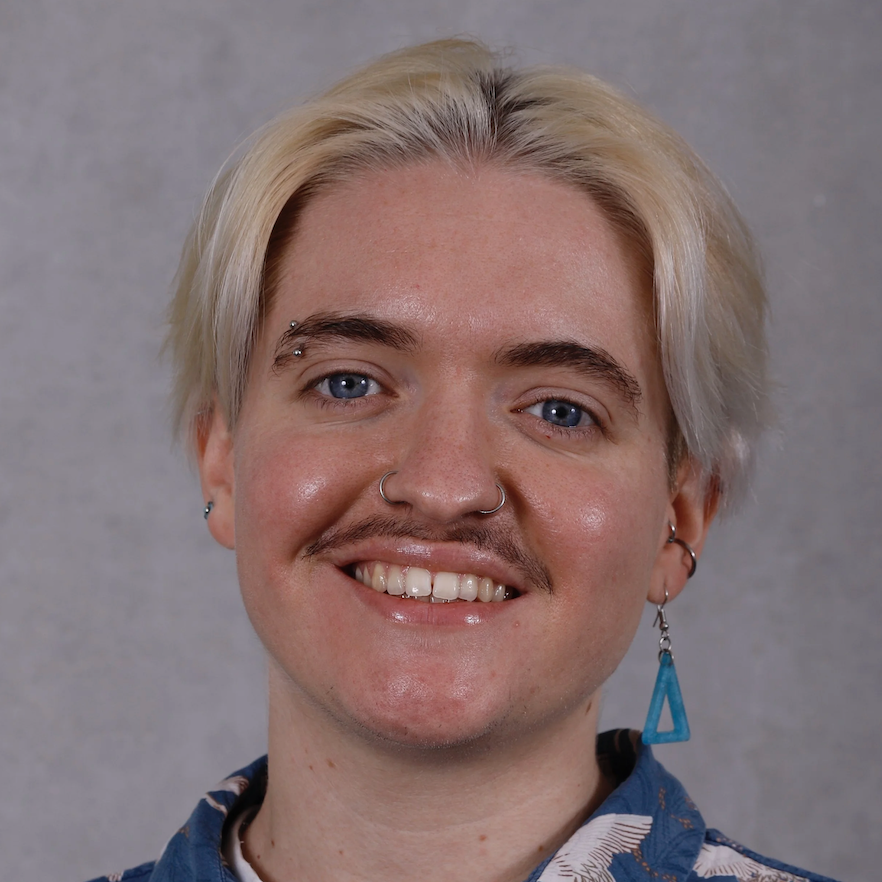
Eddie L. Ungless (he/him, they/them) recently completed their PhD at the Centre for Doctoral Training in Natural Language Processing (NLP) at the University of Edinburgh, supervised by Björn Ross, Vaishak Belle and Zachary Horne. His work addresses the felt harms of NLP technologies, motivated by a desire to effectively mitigate harm by more deeply understanding the experiences of those impacted by these technologies. He has contributed to the study of queerphobia in NLP, for example with papers addressing the potential harms of image- and text-generation models to the trans and nonbinary community. They have previously spoken on AI and gender at the Scottish AI Summit, and with journalists from Nature and TransLash.